
Like most millennial couples, my wife and I have a relationship that is based on sending Instagram reels to each other. In many ways, the true test of love these days is how closely your algorithm “syncs up.” It is a weekly occurrence for me to send Chelsea a reel only to have her say “hah, yeah I saw that yesterday.”
A couple weeks ago, we were grocery shopping and came across the watermelons. Nostalgic memories of juicy watermelon on a hot day filled our hearts. And so we instantly settled that we would purchase a watermelon. But you know what came next: the fear! The anxiety! What if we pick a… not juicy melon?!?!
Our phones whip out of our pockets, fingers flying to the nearest web browser app. “how pik best watermeloon” flies into the searchbar faster than autocorrect can fix the typos. First result is that AI answers thing that Google is doing now. We usually avoid this, for maybe ethical reasons? But there is no time for ethics today, only watermelon. We skim the AI summary and learn the criteria: the more worn the bottom is, the juicier it will be. It’s settled then. All hail Google.
We get home quickly and crack open the most worn melon we could find in the pile. And it was… underwhelming. It wasn’t bad, but it was nothing to blog home about.
But the next day, as I was making avocado toast, or buying coffees, or destroying the housing market, or whatever it is millennials do these days, I received a reel from my wife. I open it, seeing the title card: How to pick a juicy watermelon. A mix of complex emotions rolls over me: excitement at the prospect of fixing our watermelon woes, existential fear as I wonder whether our devices heard us through the eldritch homunculus of sensors and algorithms and data mining that somehow determined that this set of reels will lull us into a perfect state of delirious attention deficit, our life sucked dry watching reel after reel, the noose drawn tight by our own dopamine blinding us to the slow but inevitable enslavement of humanity.
So I opened the reel and a person confidently explains the science behind juicy watermelon, and we learned the real criteria: tiny butthole. The place where the stem once attached to the melon. I don’t remember the science behind it, but it does seem to work! So now when we go to the store, we find both look for the watermelon with the tiniest stem attachment.
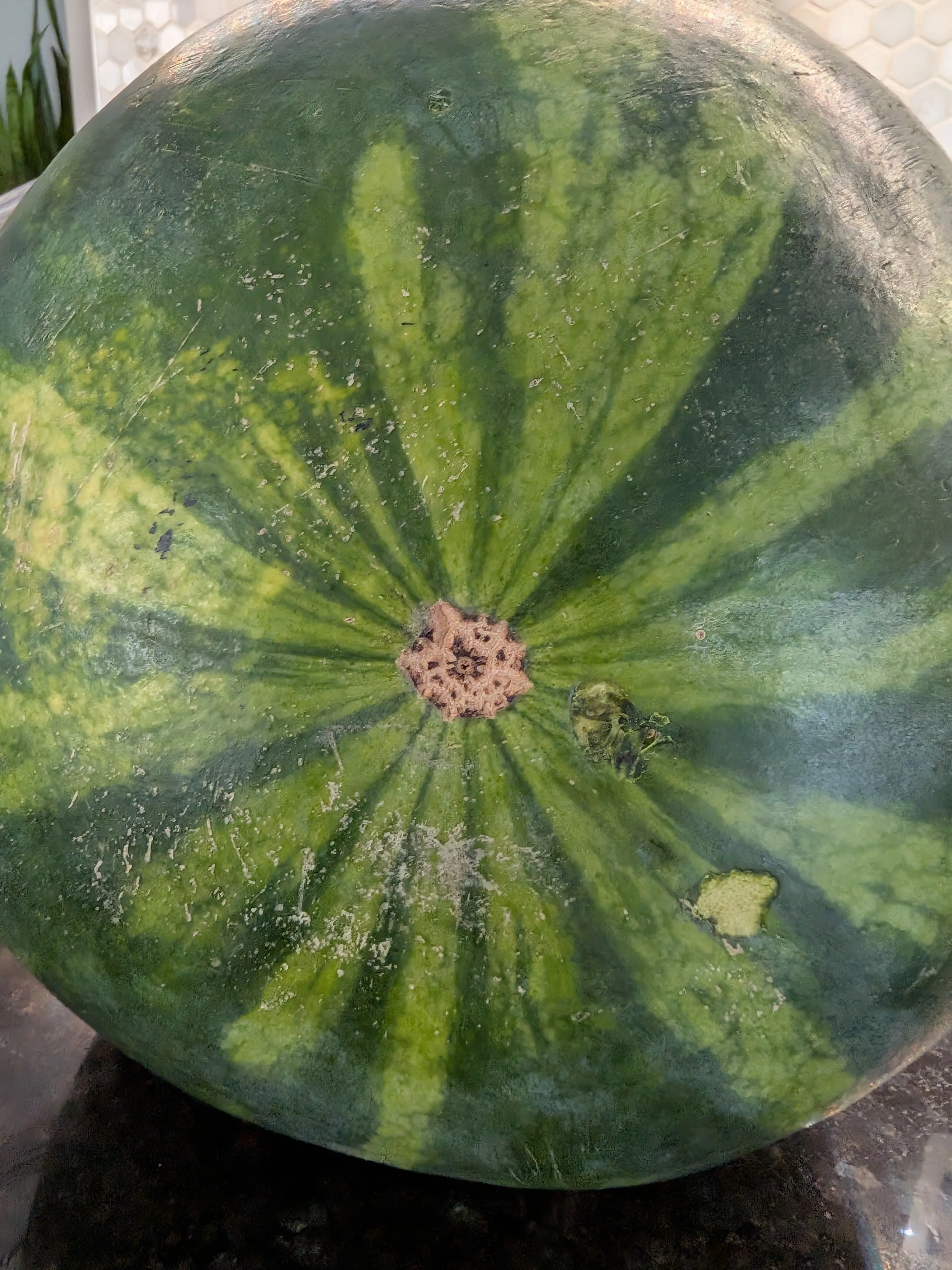
This is what agent context is about. AIs, like humans, only know what is in their memory and what you tell them. When I go to the store to buy watermelon, you can send me with the context of “the most worn underside is juiciest” or with the context “the smallest butthole is juiciest.” The goal is the same: get the juiciest watermelon. But I will only accomplish the goal if I have the right context.
Google was given the worn-underside context, and it presented that. This is kinda core to dealing with context and AI agents: this is “correct.” If you give it bad context, it will give you bad answers. Garbage in, garbage out… as they say.
So how can we make sure our agents get the correct context? Well, unfortunately, there is no silver bullet here. This is the hard “verification” problem. But there are some guidelines:
- Give examples. Instead of “write like Hemingway,” you should instead give some snippets of Hemingway’s writing.
- Carefully review the context. Context isn’t always explicitly given — it may come from downloaded material, or even a different prompt. Make sure it has correct and well-structured information. If anything is even slightly off, fix it. Small errors compound over time.
- Make sure your context hasn’t been “forgotten.” If a chat goes long, LLMs can start compressing or ignoring information. Pay attention to what the LLM is outputting and make sure it isn’t forgetting.
- Don’t bury the good context in junk. More context isn’t better context. If you send me to the store with a three-page dossier on melon ripeness, sugar content, and the history of the Cucurbitaceae family, I’m going to forget the one line that mattered. Agents have the same problem — signal drowns in noise. Say the important thing, then stop.
- Tell it the actual goal, not just the rule. “Pick the worn one” and “pick me a watermelon I’ll actually enjoy on a hot day” are different instructions. The first is a rule it’ll follow off a cliff; the second lets it use judgment when the rule doesn’t fit. Give the why, not just the what — intent travels further than instructions.
- Consider the source before you trust the context. The Google answer was confident, well-formatted, and wrong. Confidence is not correctness — for the AI or for the reel guy. Context inherits the credibility of where it came from, and “it sounded sure of itself” is how you end up with an underwhelming melon.
- Watch for context that contradicts itself. Eventually you’ve got “most worn underside” AND “tiny butthole” both rattling around in there. When your context disagrees with itself, the agent doesn’t flag the conflict — it just quietly picks one, usually the wrong one. Reconcile it yourself before you hand it over.